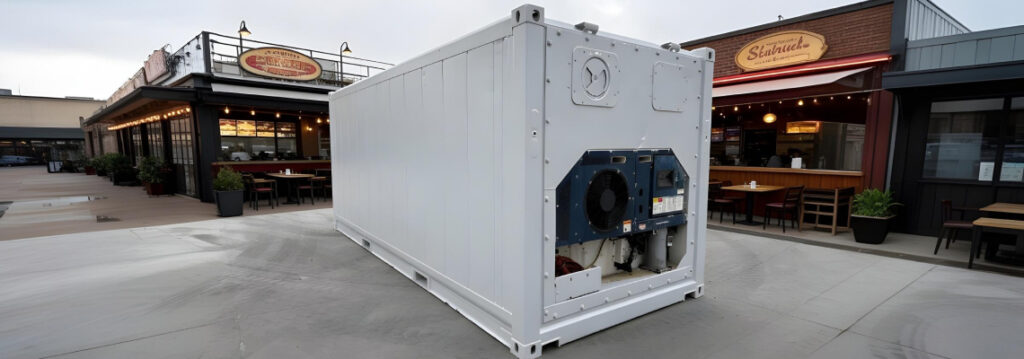
In the restaurant industry, freshness is a key factor to an establishment’s success. From proteins and produce to dairy and desserts, maintaining proper temperatures protects food quality, ensures compliance, and fortifies your reputation. As restaurants grow, add locations, or navigate seasonal demand, many owners discover their built-in walk-ins don’t satisfy their storage needs. That’s where refrigerated storage containers come in.
This guide walks restaurant owners and managers through the different types of refrigerated storage containers, how they’re used in food service operations, and what to consider before investing in one for your business.
Why Restaurants Turn to Refrigerated Storage Containers
Restaurants face various unique storage challenges:
- Seasonal menu changes and fluctuating inventory
- Catering and event commitments
- Holiday rushes
- Limited back-of-house space
- Equipment breakdowns or renovations
Refrigerated storage containers provide flexible, on-demand cold storage without requiring permanent construction. Whether you need additional freezer capacity for bulk meat purchases or temporary cold storage during a remodel, these units offer scalable solutions that address your restaurant’s needs.
Understanding Your Cold Storage Options
When it comes to refrigerated storage, there’s no one-size-fits-all solution. The right unit depends on your restaurant’s layout, daily workflow, and storage goals. Below, we dive into the most common types of cold storage containers used in the food service industry.
1. Refrigerated Containers
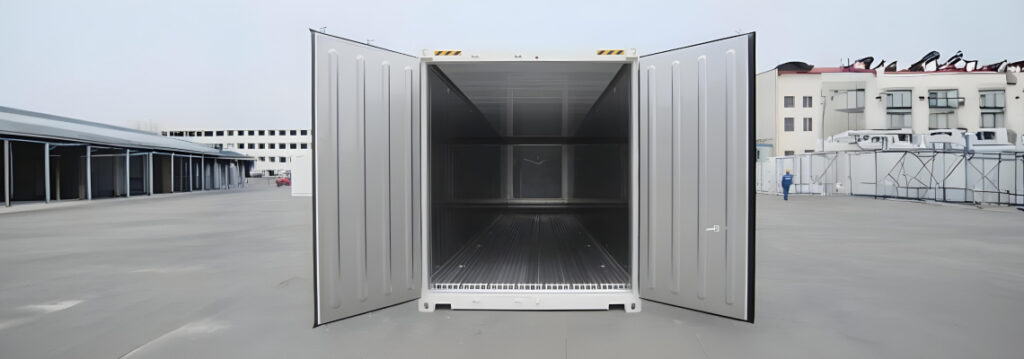
Refrigerated containers, also called reefers, are portable cold storage systems designed to maintain precise temperatures ranging from below -20°F up to 85°F. That flexibility allows them to function as either refrigerators or freezers.
Key Features:
- Available in 20ft and 40ft lengths
- Aluminum t-rail floors for airflow and durability
- Lockable double doors at one end
- Stainless steel interiors for easy cleaning
- Built-in refrigeration units powered by electricity (230V 3-phase or 460V 3-phase)
How Restaurants Use Them:
- Overflow freezer storage for bulk meat and seafood
- Additional refrigeration for high-volume produce
- Seasonal inventory expansion
- Temporary storage during kitchen renovations
- Backup refrigeration if a walk-in fails
For many restaurants, 20-foot refrigerated containers are ideal. They’re compact enough to fit in a standard parking space on-site while still providing significant additional capacity.
Advantages for Restaurant Owners:
- Plug-and-play setup: Once your unit is delivered and connected to power, it’s ready for use.
- Temperature versatility: Switch between refrigeration and freezing depending on your storage needs.
- Portability: Your restaurant can relocate units if your layout evolves.
Refrigerated containers are especially useful for restaurants that purchase inventory in bulk to reduce food costs.
2. Walk-In Coolers and Freezers
For restaurants that need daily, high-access cold storage outside their main building, container-based walk-in coolers and freezers are an excellent solution.
These units maintain temperatures between 0°F and 40°F and are NSF-approved for food storage.
Key Features:
- Single door with a strip curtain to maintain temperature during high traffic
- Electric Polar Temp cooling systems
- 220V single-phase power with 50-foot power cord
- Customizable interiors with shelving and lighting
Best Uses in Restaurants:
- High-volume back-of-house storage
- Dedicated beverage storage
- Prep overflow during peak seasons
- Commissary kitchens supporting multiple locations
If your restaurant experiences heavy foot traffic in its existing walk-in, adding a separate container-based unit can also help streamline workflow. Staff can organize the inventory more efficiently and reduce congestion in your primary kitchen space to streamline operations.
Advantages:
- Easy organization: Businesses can install shelving to match their inventory structure.
- High capacity: Ideal for restaurants that handle large deliveries.
- Accessibility: Designed for frequent entry and exit.
For multi-unit restaurant groups, these walk-in container solutions are often used as centralized cold storage hubs.
3. Refrigerated Trailers
If your restaurant operates food trucks, off-site catering, festivals, or pop-up events, refrigerated trailers offer enhanced mobility along with reliable temperature control.
These units are mounted on wheels, allowing them to back into loading docks or be positioned at event sites.
Key Features:
- 20-foot to 40-foot lengths
- All-electric systems requiring 230V 3-phase or 460V 3-phase power
- Equipped with Thermo King or Carrier cooling systems
- Aluminum t-rail floors
- Lockable double doors
Restaurant Applications:
- Catering operations
- Outdoor events and weddings
- Temporary kitchen expansions
- Emergency cold storage during disasters
Because refrigerated trailers are built for transport, they’re durable and designed to handle movement while maintaining consistent internal temperatures.
Advantages:
- Mobility: Bring cold storage wherever your event takes you.
- Compliance: Built to meet transportation regulations.
- Durability: Designed for long-distance travel and heavy use.
For restaurant owners with catering services, refrigerated trailers offer an essential enhancement to operations.
4. Insulated Containers
Insulated containers do not actively cool their contents. Instead, they maintain existing temperatures using high-quality insulation. They are sometimes referred to as “non-working” cold storage containers.
Key Features:
- Same insulation as refrigerated containers
- Steel or aluminum construction
- Lockable double doors
- No refrigeration unit
When Restaurants Use Them:
- Short-term staging of already chilled products
- Dry storage requiring temperature stability
- Storing equipment with heat sensitivity
Because they don’t require electricity, insulated containers are cost-effective and energy-efficient. However, they’re not a replacement for active refrigeration in long-term food storage.
Key Considerations Before Purchasing
Choosing the right refrigerated storage container requires thoughtful planning. Here are several factors restaurant owners should evaluate:
1. Power Requirements
Refrigerated containers and trailers require either 230V 3-phase or 460V 3-phase power. Walk-in units typically use 220V single-phase power. Confirm your property can support these requirements before purchase.
2. Available Space
A 20-foot container typically fits within a standard parking space. A 40-foot unit requires more room and clearance for delivery. Consider placement logistics, including access for installation and airflow around the unit.
3. Temperature Needs
Are you storing frozen proteins at below 0°F? Fresh produce at 34°F? Dairy at 38°F? Make sure the unit’s temperature range aligns with your most sensitive products.
4. Frequency of Access
If staff will enter frequently throughout the day, a walk-in configuration with strip curtains may be more efficient than a standard reefer with double doors.
5. Seasonal vs. Permanent Use
If you only need additional storage during the holidays, a portable refrigerated container may be ideal. If your restaurant consistently operates at maximum capacity, a long-term walk-in solution might make more sense.
Compliance and Food Safety
Restaurants must adhere to strict health department regulations. Refrigerated containers help maintain cold chain integrity, reducing the risk of temperature fluctuations that can lead to food spoilage or violations.
Stainless steel interiors make cleaning easier, and aluminum t-rail floors promote airflow, helping maintain even temperatures throughout the unit. Proper organization through shelving and clear labeling also supports safe food handling practices.
Common Restaurant Scenarios
To illustrate how these containers support restaurant operations, consider these examples:
- A steakhouse buying bulk beef to lock in pricing adds a 20-foot refrigerated container for freezer storage.
- A fast-casual chain opening a second location installs a container-based walk-in to support centralized prep.
- A catering company invests in a refrigerated trailer to manage weddings and corporate events.
- A restaurant undergoing a three-month renovation uses a reefer container to maintain inventory without interruption.
Each scenario demonstrates how flexible cold storage can protect revenue and operational continuity.
Investing in the Right Cold Storage Solution
Refrigerated storage containers provide restaurant owners with flexibility, scalability, and reliability. Whether you need temporary overflow storage, a permanent expansion of your cold capacity, or mobile refrigeration for catering operations, there’s a solution designed to meet your needs.
Container Technology has supplied high-quality refrigerated containers, walk-in units, and trailers to businesses since 1988. We offer both new and used cold storage options in Atlanta and beyond to fit a wide range of operational requirements. Ready to strengthen your restaurant’s cold storage capabilities? Request a free quote online or call us today to explore the right refrigerated storage container for your operation!