For many businesses, maintaining precise temperature control is essential for protecting valuable products. Whether you’re storing food, pharmaceuticals, flowers, or other temperature-sensitive materials, refrigerated storage plays a vital role in keeping goods safe and compliant with industry standards.
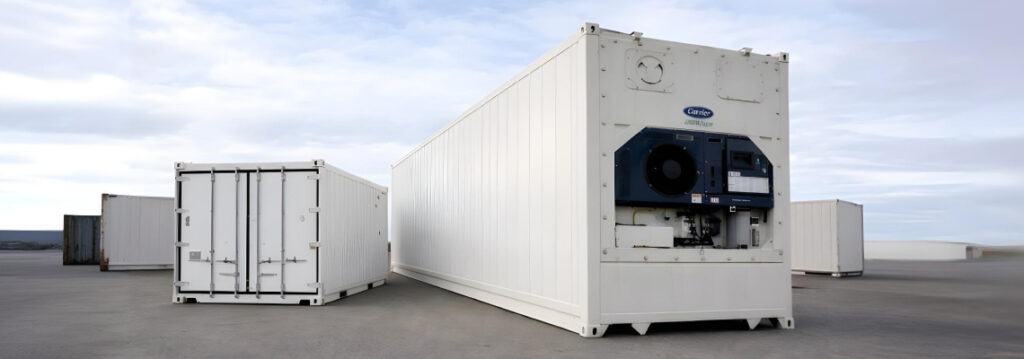
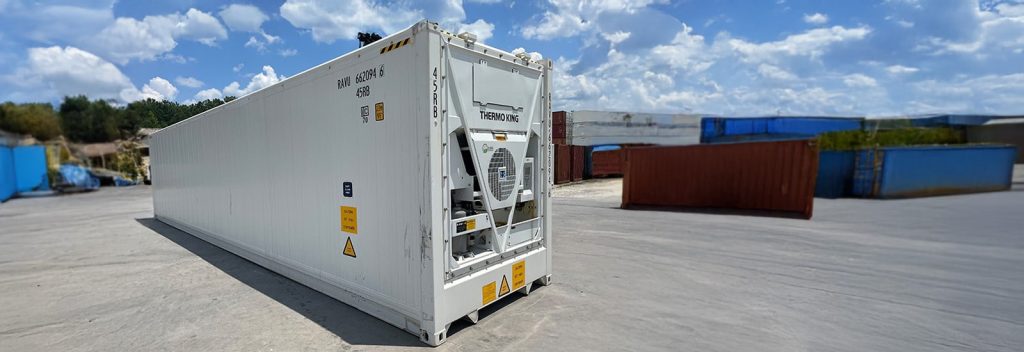
Refrigerated shipping containers, often called reefer containers, offer a practical, flexible cold storage solution. Unlike traditional walk-in coolers or permanent refrigeration facilities, reefers provide portable, durable temperature-controlled environments that businesses can place virtually anywhere with access to power.
For companies considering purchasing a refrigerated container, one of the most important decisions is selecting the right size. The two most common options are 20ft and 40ft reefer containers, each offering distinct advantages depending on your storage needs, available space, and operational requirements. Understanding the differences between these sizes can help ensure you choose the best option for your business.
Understanding Refrigerated Container Sizes
Refrigerated containers are built from insulated steel structures and equipped with integrated refrigeration systems that maintain precise temperature conditions. Most modern reefers can operate within a wide temperature range, from below -20°F to around 85°F . While the cooling technology remains similar across sizes, the primary difference between containers lies in their storage capacity and footprint.
20ft Refrigerated Containers
A 20ft reefer container is often the preferred choice for businesses that require reliable cold storage but have limited space or moderate storage demands.
Typical specifications include:
- Dimensions: 20’L x 8’W x 8’6”H
- Internal capacity: Roughly 1,000 cubic feet of usable storage
Because of their compact size, 20ft refrigerated containers are easier to place on smaller properties or in tight industrial areas. They also require less electrical power to operate compared to larger units. This size works well for businesses that need consistent refrigeration but not large-scale storage capacity.
40ft Refrigerated Containers
A 40ft reefer container provides significantly more internal space, making it a popular choice for companies that manage high volumes of temperature-sensitive products.
Typical specifications include:
- Dimensions: 40’L x 8’W x 8’6”H
- Internal capacity: Roughly 2,000 cubic feet of usable storage
These containers essentially double the storage space of a 20ft unit while maintaining the same width and height. This makes them ideal for large inventory volumes, bulk storage, or operations that require significant refrigeration capacity. Because they store more goods in a single unit, 40ft reefers are often used by distribution centers, agricultural operations, and large food service providers.
Storage Capacity: How Much Space Do You Really Need?
One of the biggest differences between 20’ and 40’ refrigerated containers is their storage capacity.
A 20’ unit is generally suitable for small to mid-size businesses that store moderate quantities of refrigerated goods. For example, a restaurant group might use a 20’ container to handle overflow inventory during busy seasons or special events. In contrast, a 40’ reefer offers approximately double the internal storage volume, making it more appropriate for businesses that regularly manage large shipments or bulk inventory.
Industries that often benefit from the larger capacity include:
- Food distribution companies
- Agricultural producers storing harvests
- Wholesale seafood or meat suppliers
- Pharmaceutical distribution centers
- Large catering or event operations
If your business regularly receives palletized shipments, the larger container may also make loading and organization easier.
Available Space at Your Facility
While storage capacity is important, available site space can also influence which container size is practical. A 20’ refrigerated container requires less ground space and can often fit into areas where a 40’ container would be difficult to place. Businesses operating in dense urban areas, smaller warehouses, or limited outdoor yards may find that the compact footprint of a 20ft unit works better.
On the other hand, companies with larger properties, such as agricultural sites, distribution hubs, or manufacturing facilities, often have ample room for a 40ft container.
It’s also important to consider clearance for delivery and placement. Container delivery trucks require adequate maneuvering space, and forklifts or pallet jacks may need room to operate near the container doors.
Power and Energy Considerations
Refrigerated containers rely on powered refrigeration units to maintain stable internal temperatures. While both 20′ and 40′ reefers use similar cooling technology, larger containers typically require slightly more energy due to the greater interior volume.
That said, modern reefer containers are designed with high-efficiency insulation and energy-efficient refrigeration systems, which help minimize operational costs.
When planning for a refrigerated container, businesses should consider:
- Electrical power availability at the installation site
- Voltage requirements for the refrigeration unit
- Backup power options in case of outages
In many cases, the difference in power consumption between container sizes is relatively small compared to the value of the additional storage capacity provided by a larger unit.
Transportation and Mobility
One of the key advantages of refrigerated shipping containers is their portability. Unlike permanent refrigeration structures, reefers can be transported and relocated as operational needs change.
Because they are smaller and lighter, 20’ containers are generally easier to transport and position. Businesses that anticipate relocating their refrigeration unit frequently, such as event planners or mobile food operations, may prefer this size.
However, 40’ containers are still highly mobile when transported by professional container delivery services. Many businesses choose the larger option because it consolidates storage into a single unit rather than requiring multiple smaller containers.
Common Industry Applications
Both 20ft and 40ft refrigerated containers serve a wide range of industries. The right choice often depends on the scale of operations and the amount of inventory being stored.
Food and Beverage
Restaurants, catering companies, food distributors, and grocery retailers frequently use refrigerated containers to store meat, seafood, dairy products, produce, and frozen foods. Smaller establishments may rely on a 20ft reefer for overflow storage, while wholesalers and distribution centers often prefer the larger capacity of a 40ft unit.
Agriculture
Farmers and agricultural operations use refrigerated containers to store freshly harvested crops, flowers, or dairy products. A controlled environment helps extend shelf life and maintain product quality before transportation or processing. Depending on harvest volume, growers may use either container size.
Pharmaceuticals and Healthcare
Medical products such as vaccines, biological samples, and temperature-sensitive medications require consistent climate control. Reefer containers provide reliable temperature stability, making them useful for laboratories, hospitals, and pharmaceutical distribution facilities.
Retail and Grocery Operations
Retailers often use refrigerated containers as temporary cold storage during store renovations, peak sales seasons, or inventory surges. The additional space allows them to maintain stock levels without overloading existing refrigeration systems.
Factors to Consider When Choosing Between 20’ and 40’ Units
Selecting the right refrigerated container size ultimately comes down to several key considerations.
1. Storage volume requirements
Evaluate how much refrigerated inventory your business typically manages and how that volume may grow in the future.
2. Available installation space
Measure the area where the container will be placed and ensure there is sufficient room for delivery and operation.
3. Operational workflow
Consider how goods will be loaded, stored, and retrieved. Larger containers can simplify palletized storage, while smaller units may fit better into tight environments.
4. Budget and long-term needs
While both container sizes offer cost-effective refrigeration, choosing the right capacity from the start can prevent the need for additional units later.
Refrigerated Container Solutions in Atlanta
For businesses in the Atlanta area seeking dependable cold storage, refrigerated shipping containers provide a flexible and durable solution. With precise temperature control, portability, and scalable capacity, they can support operations across industries ranging from food service to healthcare.
Container Technology offers a wide selection of new and used 20ft and 40ft refrigerated containers, allowing businesses to choose the right size for their specific storage needs. With durable construction, reliable refrigeration systems, and customization options available, these units provide dependable cold storage for both short-term and long-term use.
Find the Right Refrigerated Container for Your Business
Choosing between a 20’ and 40’ refrigerated container ultimately depends on your business’s storage requirements, available space, and operational goals. By carefully evaluating your needs, you can select a container that provides the right balance of capacity, efficiency, and flexibility.
If your business is exploring refrigerated storage containers in Atlanta, Container Technology can help you evaluate container sizes, specifications, and customization possibilities. With the right Atlanta reefer container in place, your organization can maintain consistent temperature control and protect the products that matter most to your operations. Request a free quote online or call us today to learn more!